Screwball Scramble for Motor Planning and Language

Screwball Scramble for motor planning and languageThe Skinny: This is a fun Rube Goldberg type game that really works on your motor planning.  It’s a cross between a marble run game and the board game Mousetrap.  There are 7 obstacles to move your ball through.  Each one has its own joystick or button to maneuver the ball with.  The goal is to move the ball through the course.

What it is: Screwball Scramble

What it’s used for: Motor Planning and Language

Ways to use it:

  • Motor Planning:
    • I would start with just successfully doing one task, then move up from there, one at a time.
    • I would progress to setting up sequences to solve, to encourage their constant accomplishments
    • Lastly, once they have solved the entire board.  I would pull out the timer.  For some kids, competing against their own time or that of a friend, is a great motivator.  The goal with having your child do this task faster and faster is that they are working from muscle memory, versus thinking through every step.  Similar to breathing, you don’t realize that you are doing it, but you are.  You don’t think about it, you just do it.  Like walking.  We want the fingers and the brain to work simultaneously.
  • Screwball Scramble for motor planning and languageLanguage:
    • For language, I would be constantly describing all the different segments with unique descriptive words: Lever boards, rails, tubes, ringing bell, etc.  There are several different areas to describe that you can build multiple new words into your child’s vocabulary.
    • Then, if your child is ready for it, and the game motivates them, you can have them name pieces of the game with the new words you have just taught them.  “Label 3 items to the get the next ball to play with” It’s a bit ABA, but it does get the repetitive practice in.

Where to find it: With 4+ stars on Amazon here!

The Source: Found it at a toy store in South Bend

Screwball Scramble for Motor Planning and Language was originally published on KidConnectionZ

Dice for Vision Convergence

Dice Stacking for vision convergenceThe Skinny: This is a quick, easy, and fun activity that works vision convergence simply because you need two eyes to focus or you can’t do the challenge.  It’s balancing dice on the end of a tongue depressor or popsicle stick that you are holding in your mouth. (see photos) If someone didn’t tell me, I would have thought it was a birthday party game!  (oh wait, I think it is!)

What it is: Dice balancing on the end of a popsicle stick or tongue depressor

What it’s used for: Vision convergence

Ways to use it:

  • Dice Stacking for vision convergenceVision Convergence:
    • First, just start with holding the popsicle stick or tongue depressor in your mouth. The tongue depressor is wider and easier to work with, or, to make it more challenging,  use the popsicle stick.  Place one die on it, then two, and so on.  We were working with five.
    • Once your kid has figured out how to balance all 5 (or more!) then ask them to count the dots that they see.  It forces longer convergence and more attention to detail.
    • Once your kid has mastered that piece, raise the challenge, give them an order to put the dice in. 1-5 or five random numbers to work on their short term memory as well.  They have to then look at the die they are grabbing next and then to the dies that are on their stick.  Forcing some natural convergence and divergence!

Dice Stacking for vision convergenceWhere to find it: Typically, you can find this around the house.  But, you can get the dice and tongue depressors or popsicle sticks (more challenging) on Amazon.  Please remember, if you buy it through me you don’t pay any difference, and I get a small percentage. Thank you.

The Source: Dr. Major – Central Coast Vision and Learning – 805.431.1050


Dice for Vision Convergence was originally published on KidConnectionZ

Shakespeare Word Challenge

Thanks to mentalfloss.com, for helping us see another list of 20 words we wouldn’t be able to iterate today without the help of The Bard. Words such as assassination, bedazzled, cold–blooded, fashionable, scuffle, swagger, and more… It’s amazing what this guy brought to the table. So, because of this, I thought of the Shakespeare Word…

Shakespeare Word Challenge was originally published on Shakespeare for Kids Books

#ShakesTag the Online Game of Shakespeare

Well today is the day of the week that most people practice religion of one type or another. For some people it’s the church, others football, and to others, reading is religion. Stepping into a slightly tighter niche than that, Shakespeare. And some of these people who love the Bard, get together on Sunday for a friendly game of #ShakesTag.#ShakesTag

What is #ShakesTag, you may ask? Well, it’s a game created by two ladies: Dr. Wells and Lara Schiffbauer. But every week they play to some type of theme, post together a short Shakespeare tweet, related to said theme, then tag it with #ShakesTag. And off goes the game!

It’s surprising, how many people are playing, and it’s fun to get tagged by someone, because it means you’re “in the gang”.

But teachers, this is where I think you can engage your kids in learning some of Shakespeare’s famous lines with your class. Or, more importantly, that is language means more than just words written on a piece of paper. During one of your classroom sessions, start a #ShakesTag game with your kids on Twitter. See how many references to “love” or insults, or humor, or some other term that would surprise and engage your kids.

Let me know how it goes. And if you have any stories of teaching kids with Shakespeare, I would love to hear and share them. Let me know!

-brendan

#shakestag rules

#ShakesTag the Online Game of Shakespeare was originally published on Shakespeare for Kids Books

autism and stimming

Autism and Depression, is there a link?

I have spent a lot of time with autism, and what I know for sure is that I don’t know autism. I mean, I know the stereotype, but ALL the kids that I have seen on the spectrum, are so uniquely different, that I can clearly say that nobody really “knows” autism. When I talk to teachers of “typical” kids, they always say that no two kids are alike in their class. Then why are people so quick to judge an autistic kid and drop them all in the same bucket? The fact is, you can’t.

What we do know about autism, is that we don’t know what causes it. But, we also know that it’s a “multi-faceted disease”, or some fancy term like that. In other words, there’s a LOT of different things converging at one time, which manifest themselves into “autistic behaviors”.

The fact is, we all have what I call “red flags”: challenges we face when we are a kid or even all throughout our adult lives. Typically we have 2 or 3 and the doctor tells our parents, “don’t worry, they’ll grow through it…” Whether this be dyslexia, hearing issues, bi-polar, ADHD, OCD, sensory, eating issues, etc., the list goes on and on. Our bodies, being amazing machinautism and depressiones at adaptation, adjust and find coping mechanisms that allow us to grow through or work with these red flags. Many of us use our own little quirks as a strength, once we understand and except our challenges (I’m clearly ADHD). But, autistic kids, they are just slightly different, they happen to have a few more “red flags”, and when their body can’t easily adapt to all these challenges, they combine to exhibit “autistic behaviors”.

What now becomes the new challenge is for the parents to find out what these “red flags” are and start working on them. It’s very hard at first, but once you start to identify and conquer these challenges, things start snowballing back together for your kid. This doesn’t just happen overnight, it takes years, but it can happen and may take ALOT of research, hard work, dedication, and deduction.

The really good news about finding these solutions for your child, is that, while you are “healing” one of these red flags, your child is adapting to their challenges on the inside, unbeknownst to you. It’s really cool, actually. As you fill their gap, they have built another strength, dare I say, a “super hero skill”. That’s the next trick, to find that newly created talent, AND FEED IT! Because they will be great….no, a genius in this area! And don’t think I’m the only one that thinks this is how a genius is created, listen to Barry Panter, a retired psychiatrist and psychoanalyst, when talking about people who are “wired” differently, “the neurosynaptic and neurochemical pathways in their brains may be different than most brains, and it may be this that contributes greatly to creativity and their genius” (quoted from USA Today article, “Tortured genius” by Maria Puente).

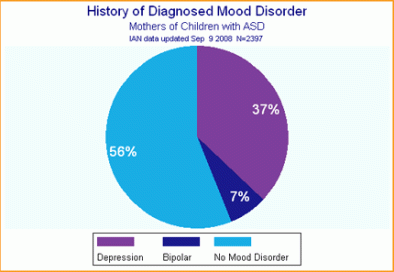
So, how is this all related to depression? Well, ever since Robin Williams passed away, I’ve been noodling this idea, because what I kept hearing from the “doctors” is that they don’t know exactly what causes depression and that it is typically manifested over years and due to several different causes….Several. Different. Causes. That’s it. That’s the connection.

At this point, this is more of an observation than anything else. But, there are two things I do know, many people on the autism spectrum are depressed and if you have one of these challenges, do something about it, because you don’t know what it will combine with down the road and manifest into. Most people who get help turn out stronger and better than before!

Code4Armour for Medical and Safety Issues

The Skinny: Code4Armour is a unique device that acts as a medical wristband. Essentially replacing your medical ID alert bracelet with a wristband that contains an RFID device. This allows any medical responder with an iPhone and an app access to all your child’s relevant medical information. I like this for some kids with challenges because if they have limited language, or neurological issues, or anything that can render their ability to communicate effectively, then this can be a perfect solution. They are currently funding on Indiegogo.  I have yet to try one out to see if it passes muster, because they are still in their funding phase, but it appears to be a fabulous device and can’t wait to get my hands on one to share my experiences with you. If you have a child that elopes this would be a great device as well, because it can help your child get back home when they are lost. Go over to their site and check them out.

What it is: Code4Armour

What it’s used for: Medical information for kids with language challenges.  Kids that elope frequently.

Ways to use it:

  • Medical:
      • You simply wear it on your wrist.  In case of an emergency, a medical responder scans the wristband and the information is pulled up.

    Where to find it: The products website is located here: Code4Armour.com

    Their Indiegogo site for crowdfunding this brand-new state-of-the-art product is here.

    The Source: Code4Armour. I connected with them through Twitter, and was really engaged with what this product can potentially do.

code4armour for medical

Code4Armour for Medical and Safety Issues was originally published on KidConnectionZ

David Garrick & the fall of bombastic acting

sarij's avatarThe View From Sari's World

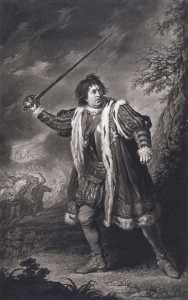
Garrick as Richard III Garrick as Richard III

When you think of great Shakespearean actors, who comes to mind? I think of Kenneth Branagh, James Earl Jones (is there a better Lear?), Lawrence Olivier, Helen Mirren and Tom Huddleston. Each of these actors, when on stage, becomes the character they play. We are pulled into the drama precisely because of this. Modern audiences are accustomed to players who bring fiction to life; we would be disappointed by actors who just recited lines. There a term for this type of acting, “phoning it in”. “Hamming it up” is a derogatory term we use for those who do the opposite by overacting with exaggerated body language and lines. But, would you be surprised to learn this wasn’t always the case? Prior to 1740, this type of acting was the norm.

Jack Lynch, author of Becoming Shakespeare, offers readers a look into the history of how…

View original post 596 more words

Word Magic for Language, Spelling, and First Words

The Skinny: Word Magic is a great app that we used with my kid to help him learn his first words.  At about 3 years old, we were still very concerned about his language.  But, he was starting to come along.  I remember the time when we had a giant matrix of words, and worked every day…

Word Magic for Language, Spelling, and First Words was originally published on KidConnectionZ

Pirate Insult Generator

Not just Talk, but INSULT Like a Pirate!

pirate insult generatorAs we all know (or should, if you still have some kid left in you!) today is the official, Talk Like A Pirate Day! It’s a lot of fun. And to spice it up a bit, I put a bit of a twist to it. I created an official “Insult Like a Pirate” sheet where you can put all your foul-smelling words together and lovingly share them with a friend or family member with great joy! You can find it here:

Pirate Insult Generator

Enjoy you Snivelin’ marooning Sea-dogs!

(and, if you are wondering, that is Robert Louis Stevenson on the right and Long John Silver down below!)  You can find their AWESOME Treasure Island for Kids book here (yes, shameless plug, but kids LOVE the books!)

-Brendan

long john silver playing with plays

Hyper Dash for Motor Planning and Sequencing

The Skinny: Hyper Dash is a fun, easy to set up game that can can be easy to play and progress to much more challenging.  In a nutshell, set up the different colored domes around your room, yard, house, etc, and then turn the hand held device on.  It will tell you a number or color, RUN…

Hyper Dash for Motor Planning and Sequencing was originally published on KidConnectionZ